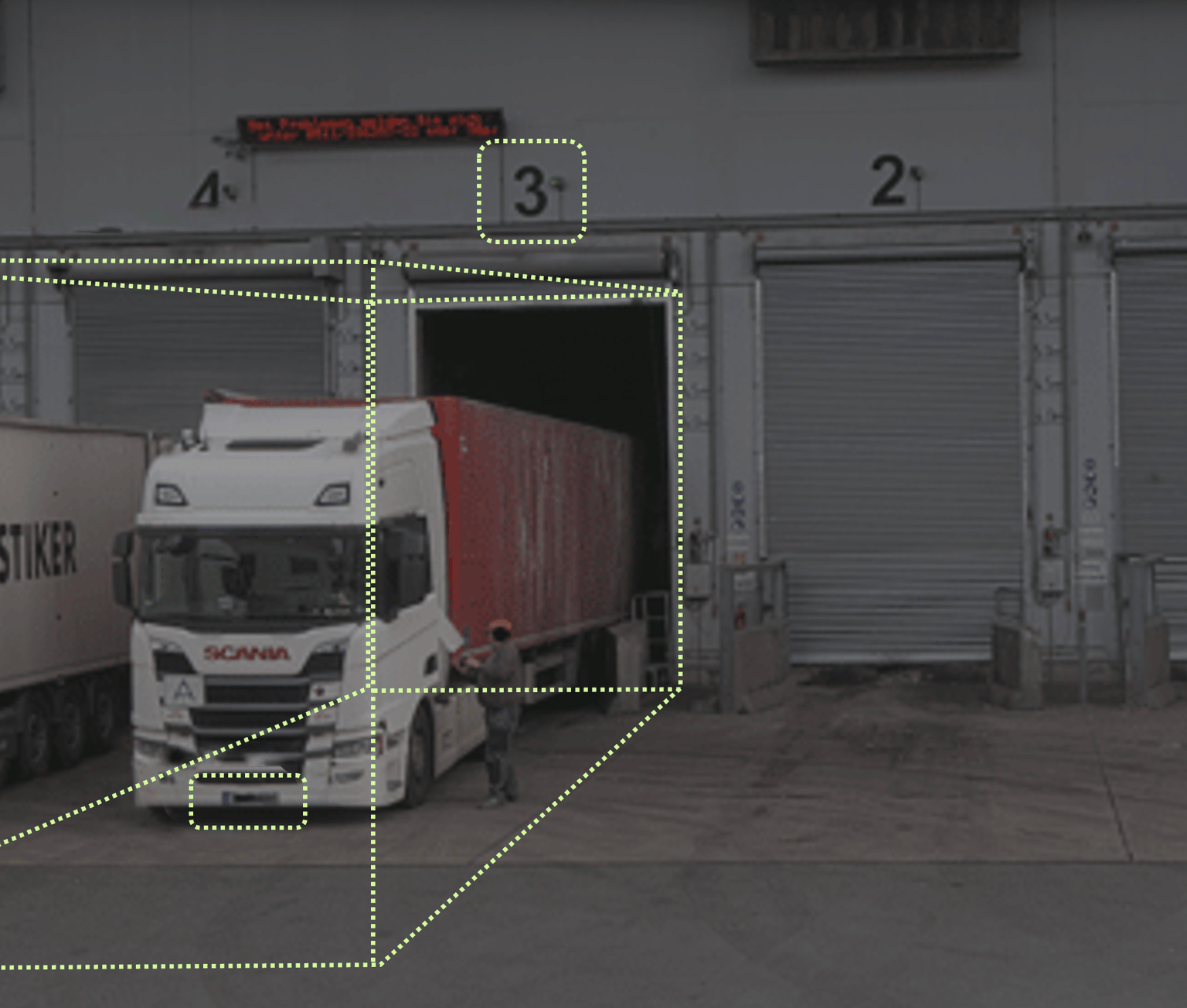
Before a load is accepted at an energy-from-waste plant, a defensible pre-acceptance procedure has to establish four things: who delivered it, whether it matches the contracted waste stream, whether it fits within permitted weight and quantity limits, and whether anything in the load should stop it reaching the tipping point at all. Waste acceptance criteria for EfW plants exist to answer those four questions consistently, load after load, in a way that holds up when a regulator or auditor asks for the record months later. Get any one of them wrong at the gate and the cost shows up later - in a contamination event, a contract dispute, or a gap in the documentation an inspector expects to see.
This is a practical walkthrough of what actually happens at the gate, where manual procedures tend to break down, and what a checklist for a defensible process needs to contain.
The legal basis: input control and documentation duties
For German facilities, the starting point is the input control (Eingangskontrolle) duty set out in 17. BImSchV, the regulation governing incineration and co-incineration of waste, last amended in February 2024. Alongside it sits the Nachweisverordnung (NachwV) and the electronic waste tracking system (eANV), which govern how movements of notifiable waste are documented. Together they establish that operators must check and record what arrives before it is processed, and keep evidence of that check.
Exactly what a given plant has to check, and how, is not uniform across Germany or Europe. It is set out in each facility's own permit (Genehmigungsbescheid) and interpreted by the competent authority responsible for that site. Two plants running the same waste streams can have different documented acceptance procedures because their permits were written differently. This article does not substitute for that permit text; it describes what a workable procedure typically has to cover, not a paragraph to cite. Operators should check their own permit conditions before treating anything here as a compliance reference. For how this same intake data connects to emissions reporting further downstream, see how the same intake data supports MRV reporting.
Waste acceptance criteria at the gate: what gets checked, in order
A gate procedure that holds up under audit checks things in a fixed sequence, not opportunistically. Skipping the order is how mismatches get caught late instead of early.
Carrier and contract verification
The first check is identity: is this carrier authorized to deliver this waste stream to this facility, under an active contract or transport permit? This is typically checked against a carrier and contract register before the vehicle is waved toward the scale. A carrier arriving without a matching, current contract is a stop condition, not a note for later.
Waste stream and contracted material match
Every delivery is tied to a declared waste stream and, in Germany, typically an Abfallschlüsselnummer (waste key number) on the accompanying documentation. The gate check confirms the delivery note matches what that carrier and client are contracted to deliver - not a different waste code, not a different origin, not a stream the facility's permit does not cover.
Weight and tonnage limits
The vehicle crosses the weighbridge (Fahrzeugwaage), and the resulting weight is checked against the facility's permitted daily and annual tonnage limits and against any per-carrier or per-contract quantity ceilings. This produces the weighing note (Wiegeschein) that becomes part of the permanent record for that delivery.
Visual and composition screening before tipping
Before the load is tipped into the bunker, it gets a visual and, where cameras are installed, an automated composition check for material that should not be there: oversized items, obviously non-conforming waste, and hazardous items. This is also where hazardous items that must be caught before tipping - gas cylinders, pressurized canisters, and similar - get flagged, along with items covered separately in our piece on lithium-ion battery fires at waste facilities. This step is the last point at which a problem in the load can be addressed before it becomes a bunker or grate problem.
Where manual pre-acceptance procedures fail
Manual gate procedures depend on a person at the barrier making four judgment calls, quickly, for every truck, all day. In practice, that breaks down in predictable ways: a carrier check against a paper or spreadsheet register that is a day or more out of date; a delivery note accepted without cross-checking the waste code against the contract; a visual check that catches obviously wrong material but misses what is buried under the surface of the load; and a paper weighing note that gets filed but is slow to reconcile against contract terms. None of these are failures of diligence - they are what happens when a process built for judgment calls has no structural way to catch a mismatch before the load is already committed. The consequence tends to surface downstream rather than at the gate, in composition variability that shows up as combustion instability, one of the contributing factors behind the unplanned downtime that affects the sector; POWER Magazine reported an industry average of 22.9 days of unplanned downtime per year, with boiler-related causes accounting for 43% of it. Our piece on boiler fouling and corrosion in waste-to-energy plants covers that mechanism directly.
What changes when carrier and composition data are captured automatically at the gate
The structural fix is not a stricter manual process - it is moving the carrier and contract match, and the composition screen, to the point where the truck arrives rather than the point where someone later reconciles paperwork. When carrier identity and contract match are verified automatically at the gate, a mismatch is flagged before the truck reaches the scale, rather than being discovered during monthly reconciliation. The same automated capture at the tipping point extends the check into the load itself; how composition screening works at the tipping point covers the mechanics, and the resulting data has a second use beyond acceptance: it feeds directly into bunker management, calorific value estimation, and contaminant detection, and into turning flagged contaminants into a resource-recovery signal rather than a discarded exception. Wasteer's gate and bunker cameras are already in use in more than 20 plants running this model. The software supplies the data and produces the timestamped record and audit trail that input control and documentation duties call for; it does not itself discharge the legal obligation. Compliance remains the operator's responsibility - what changes is how early a problem is visible, and how complete the record is when someone asks for it.
Checklist: building a defensible pre-acceptance procedure
- Carrier and contract register checked before or at arrival, not reconciled afterward
- Delivery note cross-checked against contracted waste stream and waste key number
- Weighing note (Wiegeschein) generated and retained for every delivery
- Visual or automated composition screening performed before tipping, not sampled occasionally
- Hazardous item detection covering gas cylinders, batteries, and other flagged classes
- Time-stamped, image-backed record retained per delivery, not just a written summary
- Escalation path defined for a stop-load event: who is notified, and when
- Procedure checked against the facility's own permit conditions, not a generic template
FAQ
Does software satisfy the Eingangskontrolle duty on its own? No. Input control is a duty on the operator. Software can supply the data, the timestamped record, and the audit trail that duty requires, but the legal responsibility, and the judgment on what to do with a flagged load, stays with the operator.
How often should the acceptance procedure be checked against the permit? There is no universal interval; it depends on the facility's permit and its competent authority. What matters is that the documented procedure and the permit conditions are reviewed together, not left to drift apart.
What is the difference between a stop-load event and a flagged delivery? A flagged delivery has an issue worth recording and monitoring, a borderline composition reading for instance, but is still accepted. A stop-load event means the delivery does not proceed past that check point, typically because the carrier or contract does not match, or a hazardous item is identified before tipping.
Does automated screening replace the visual check at the tipping point? It extends it rather than replacing it. Automated detection covers every load rather than a sample, but the record it produces is there to support a human decision at the point of tipping, not to remove that decision.