AI Waste Analysis for Bunker Management, Calorific Value, and Contaminant Detection
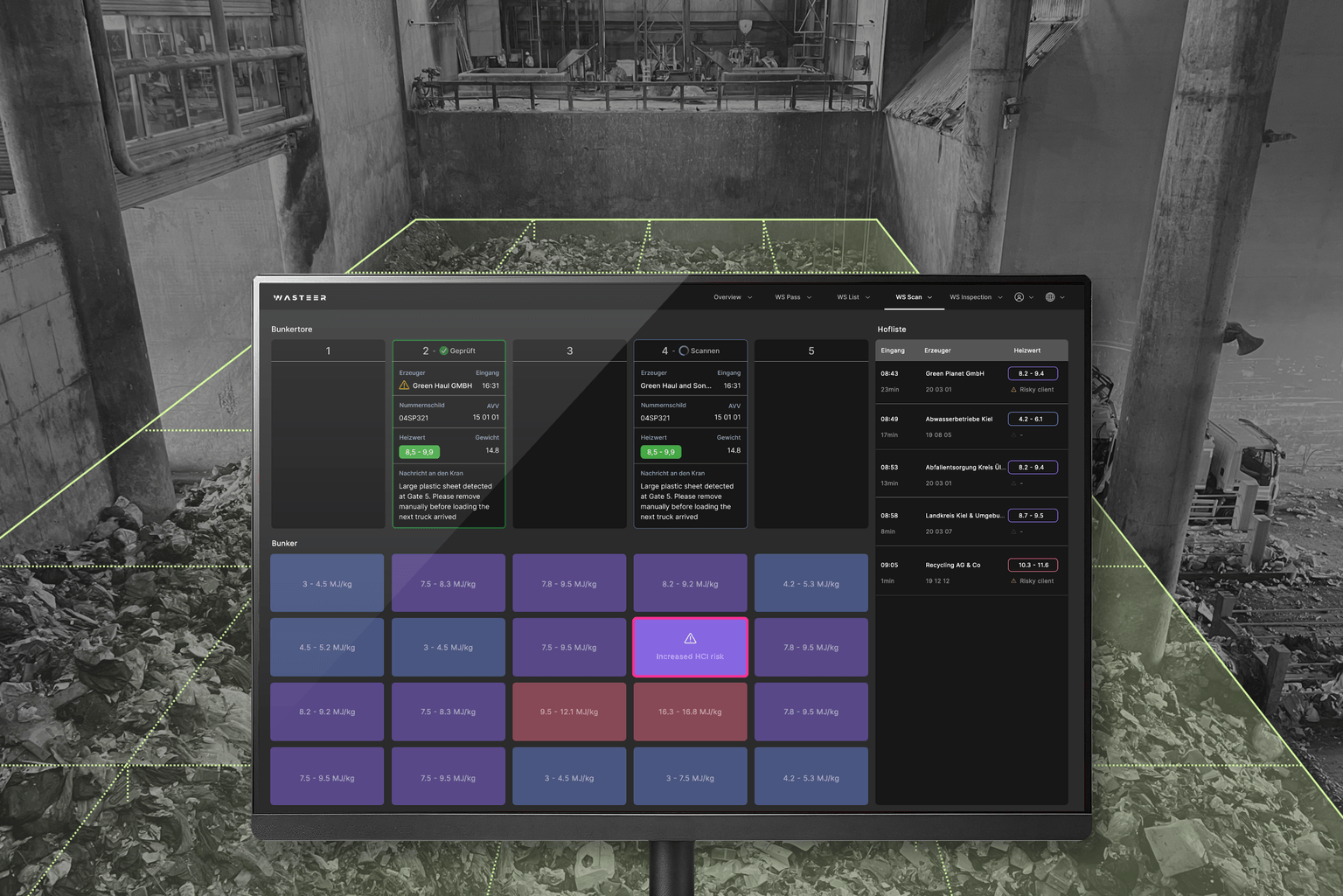
Berlin, 25 September 2025 - Wasteer delivers continuous AI waste analysis inside the bunker so operators can see what enters the plant, understand its calorific value, and address risks before they become incidents. The system brings together calorific value analysis (LHV), contaminant detection, and bunker management into one workflow that supports daily operations, reporting, and supplier discussions.
Why this matters
Energy-from-waste plants receive layered, heterogeneous waste. Limited visibility at the bunker floor increases the probability of avoidable issues: batteries and cylinders that can ignite or explode, aerosols and oversized objects that cause blockages or damage, and variable fuel quality that drives acid-gas peaks and unstable combustion. Traditional sampling and occasional mono-charge tests have value, but they are rarely representative of the hour-by-hour input. Operators need continuous, objective input control to plan mixing, prevent incidents, and document quality for each delivery.
Calorific value analysis (LHV)
Wasteer estimates lower heating value for every delivery using high-resolution imaging and hybrid models. The platform provides a central estimate and a narrow confidence range based on visible composition, moisture cues, and fines. With this information, operators can schedule tipping, blend bunker sections more effectively, and stabilize combustion. Over time, historical LHV trends expose seasonal patterns and supplier variability, informing maintenance planning, reagent budgeting, and throughput expectations.
Contaminant detection and nitrous oxide cylinder detection
The system continuously scans the bunker for safety-critical items and outliers and links each event to the responsible delivery. This includes batteries, gas cylinders, aerosols and sprays, and oversized or dense materials likely to cause damage. A specific use case is nitrous oxide cylinder detection (N2O): the platform flags these cylinders with clear images and timestamps so teams can halt tipping, isolate the load, or adjust bunker operations immediately. Event logs provide a defensible record for internal audits and supplier conversations.
Bunker management and input control
By combining composition, LHV forecasts, and risk indicators for acid gases such as HCl and SO₂, Wasteer supports practical bunker decisions: which areas to mix, when to sequence specific deliveries, and how to avoid fuel spikes. The objective is straightforward-fewer disruptions and steadier combustion-which translates into higher plant availability and more predictable operations, without imposing changes on the control-room setup.
How Wasteer works
Fixed cameras capture the bunker floor continuously. Models detect objects, classify materials into detailed categories, and infer properties that matter to the process, including moisture, fines/dust, and inert content. Special handling avoids double counting for bags and partially obscured items, and results are calibrated to bunker reality rather than idealized laboratory conditions. Output appears in a web interface with real-time alerts, delivery-level summaries, and trend views for shifts and suppliers.
Deployment and operations
A standard deployment uses ruggedized cameras, an on-site edge server, and a secure cloud application. Only power and internet are required; integration with scale systems, ERP, or DCS/SCADA is available but not mandatory. Housings, vibration mitigation, and cleaning concepts keep images usable in dusty, hot environments. Training is concise-the interface is designed for quick interpretation with clear visuals and short text summaries.
Documentation, compliance, and supplier accountability
Every analysis is tied to a delivery, enabling traceable input documentation. Where plants apply attribution methods for fossil and biogenic shares, Wasteer aligns outputs accordingly. Forecasts are designed for operational decision-making and also reduce the effort of periodic reporting. The same dataset supports structured input control and supplier accountability, including evidence-based discussions about quality and potential cost allocation.
Impact on plant availability
Earlier detection of hazards and better blending reduce disruptions, stabilize combustion, and lower the likelihood of damage or blockages-key contributors to higher availability. Over weeks and months, continuous data builds a reliable picture of supplier performance and seasonal trends, helping teams plan maintenance windows and reagent consumption with greater confidence.
Scope and limitations
Analyses reflect the visible bunker surface at the time of capture. Occlusions and extreme contamination can limit certainty. Forecasts complement, but do not replace, statutory measurements unless accepted by local regulators. Confidence bands tighten when evidence is strong and widen when visibility is poor.