Detection of Nitrous Oxide and Gas Cylinders in Waste Management: Safety for Your Facility
In recent years, the use of nitrous oxide (laughing gas) as a recreational drug has increased massively. The result: ever-larger quantities of empty nitrous oxide canisters and other gas containers are being disposed of improperly in household waste or public bins, instead of being correctly disposed of as hazardous waste. When such a gas cylinder is illegally disposed of in residual waste, it ends up in refuse trucks and ultimately in waste incineration or recycling facilities – with potentially fatal consequences. Pressurised gas cylinders explode in the hot furnaces of incineration plants or under mechanical stress in refuse vehicles and sorting facilities. The industry is sounding the alarm: "Almost every week we have ... incidents caused by improperly disposed nitrous oxide cartridges", a plant operator recently reported – one facility even had to be taken offline unexpectedly due to these explosions.
The scale of the problem can be quantified. Take the Netherlands: in 2023, an estimated 500,000 nitrous oxide cylinders were illegally consumed. Despite intensive visual checks before incineration, only around 470,000 cylinders could be sorted out – tens of thousands of nitrous oxide cylinders still ended up in the furnace. According to the Dutch waste management association, one in three of these cylinders explodes and approximately one in six causes damage. Take Germany: hazardous pressurised containers regularly appear in waste here too. Hamburg's municipal cleaning services found over 70 discarded nitrous oxide canisters in just 125 public litter bins during a spot check in July 2024 – and that was on a normal weekend. Such finds suggest an even higher number of undetected cases at festivals and major events. Take Norway: in Oslo, the number of nitrous oxide cylinders collected rose from 1 tonne (2021) to an expected 45 tonnes in 2024 – enormous growth. These Europe-wide trends confirm what plant operators see every day: ever more gas cylinders are entering the waste stream where they have no place.
Growing Danger for Personnel, Plant Safety, and Operating Costs
Illegally disposed gas cylinders are anything but harmless party waste. Exploding nitrous oxide and other pressurised gas containers pose a serious danger to personnel and plant infrastructure. In waste-to-energy plants, furnaces are heated to around 1,000°C – pressurised nitrous oxide canisters act like small bombs in such conditions. Detonations can blow open furnace doors, bend grate bars and even damage refractory concrete. Every explosion potentially causes serious damage to the plant and endangers employees. Such incidents now occur dozens of times per week, as industry reports indicate. "Explosions in waste incineration plants occur time and again ... because many pressurised containers are not completely emptied before disposal", waste management associations warn.
Beyond the immediate safety risk, every explosion leads to costly operational disruptions. Plants often have to be shut down for repairs, restricting disposal capacity and causing high costs. In Oslo, a major waste-to-energy plant was forced into a total of 77 unplanned shutdown days in 2024 due to recurring nitrous oxide cylinder explosions – the additional costs amounted to over four million euros. In the Netherlands, the waste management association put the damage at around 65 million euros in 2023. Similarly, Hamburg's municipal cleaning services already report damage "in the six-figure range" at their facilities due to nitrous oxide cylinder explosions. France's waste industry estimates the annual cost from exploding nitrous oxide cylinders at 15–20 million euros. These millions are ultimately missing from operations – flowing into repairs, spare parts, disposal of fire debris and higher insurance premiums. Some insurers have already tightened conditions for waste operations or even refused coverage due to the accumulation of such claims. In terms of personnel, we have so far been fortunate – it is something of a miracle that no one has been seriously injured. But operators know: every further incident carries the risk of personal injury. In Oslo, it was already necessary to equip employees with special protective equipment to protect them from the effects of potential nitrous oxide explosions.
In short: improperly disposed gas cylinders represent an enormous risk to the safety, availability and economic viability of waste incineration and recovery plants. Accordingly, waste management associations and plant operators are calling for urgent countermeasures. Alongside preventive approaches such as consumer education (e.g. deposit schemes for cartridges), one thing is increasingly coming into focus: technical solutions to detect dangerous gas cylinders in time, before they cause damage.
Wasteer Reliably Detects Gas Cylinders – Even Deformed or Hidden Ones
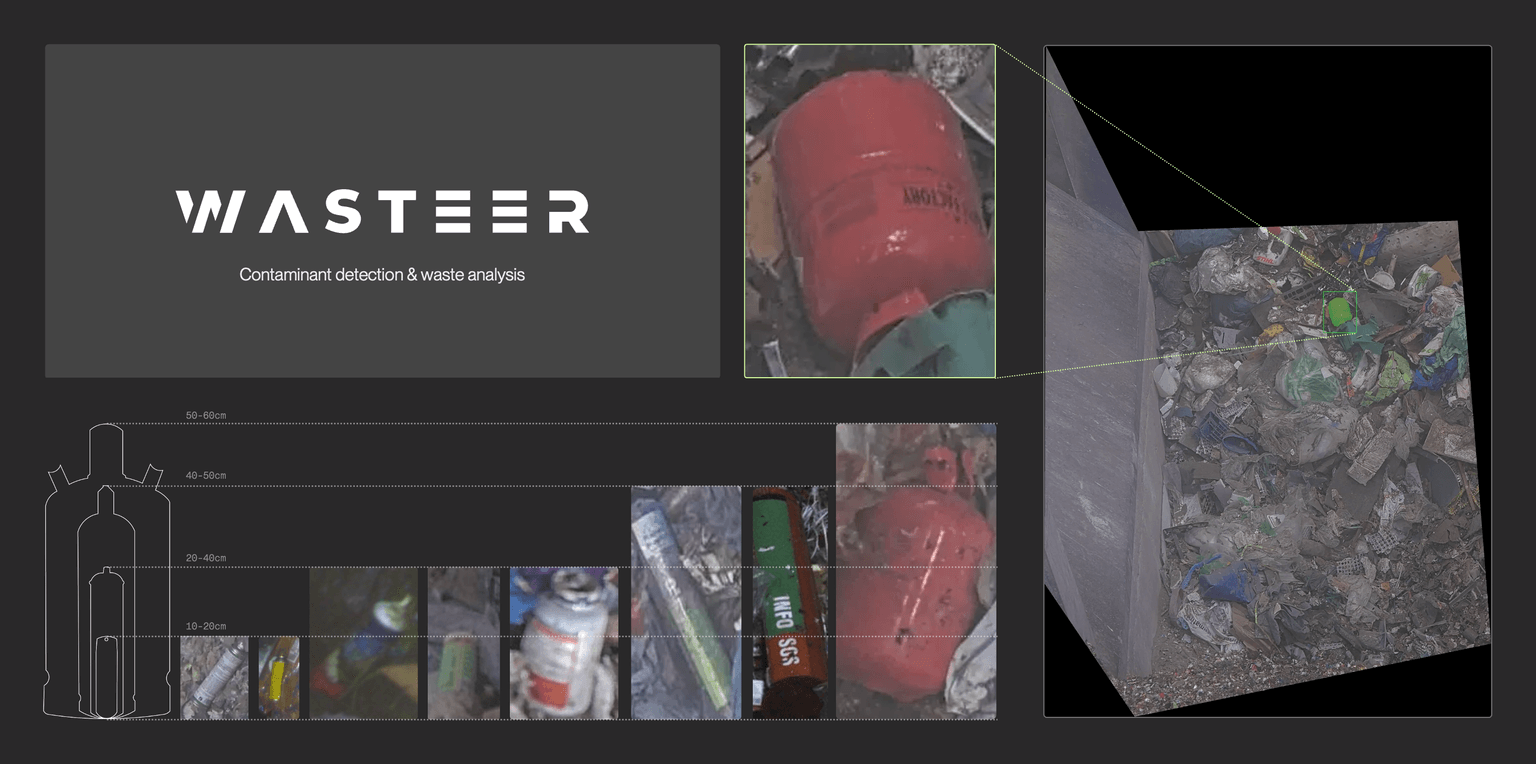
This is where Wasteer comes in. We have developed an AI-powered detection system that identifies illegally disposed gas cylinders at an early stage, before they reach the incinerator. Our solution identifies nitrous oxide cartridges and other gas cylinders in incoming waste with up to 90% accuracy – even when cylinders are deformed, contaminated or only partially visible among the waste. This is made possible by a sophisticated image and object recognition algorithm specifically trained on the characteristic shapes and features of pressurised gas containers. Cameras monitor the waste stream (for example in the bunker or on conveyor belts) and our AI software analyses the image data in real time. When the system detects a gas cylinder, an alarm is immediately triggered: operations personnel receive a real-time alert so that the dangerous cylinder can be selectively removed or the affected waste treated separately, before any explosion occurs.
This automated gas cylinder detection provides plant operators with a decisive safety advantage. Unlike human employees – who can easily miss something in hectic operations or with large volumes of waste – the AI remains tirelessly alert. It can even detect hidden gas containers, for example when they are wrapped in plastic bags or wedged between other bulky waste. Wasteer's system was developed in close collaboration with waste management companies and is continuously improved with new image data, ensuring it is tested and optimised for real-world environments. Our technology is already deployed in 21 facilities across Europe – including waste incineration and sorting plants in Germany, the Netherlands, the United Kingdom, Poland, Italy and Austria. The operators of these facilities rely on Wasteer to significantly reduce the risk from unwanted gas cylinders in waste. In many cases, early detection has already prevented potential explosions and avoided costly downtime. Our customers report a noticeable improvement in plant safety and reduced pressure on personnel, who can now work with greater calm and confidence in the facility's safety.
Response Strategies for Plants: What to Do with Detected Gas Cylinders?
Early detection is the first and most important step – but what happens once a gas cylinder has been identified? Clever response strategies are needed to neutralise the danger and prevent recurrence. Plant operators across Europe are already implementing various measures to respond to detections and prevent future incidents:
Establishing risk zones in the bunker: When a gas cylinder is discovered in the waste bunker or at the reception area, it is placed in a predefined zone. This means the suspicious waste is stored or marked separately, so that it cannot inadvertently be fed into the furnace. Specialist disposal teams can then selectively retrieve and remove the gas cylinder – often using grabs or remotely controlled machinery to protect personnel. Such quarantine zones in the waste bunker reduce the risk of a hazardous cylinder going undetected into the combustion process.
Fees and sanctions for waste deliverers: Some plants are beginning to hold those responsible accountable. When prohibited gas cylinders are found in a waste delivery, consequences may follow for the deliverer (e.g. the municipal waste collector or commercial waste customer). This can take the form of additional fees or penalties to curb improper disposal. In Brussels, for example, waste incineration plants have announced sanctions against waste companies that include nitrous oxide cylinders in their deliveries – including temporary delivery bans of five days for repeat offenders. Such measures send a clear signal: those who smuggle in hazardous materials must face consequences. In the long term, this aims to improve upstream controls – waste collectors are motivated to check their loads more carefully in advance.
Forecasting and customer risk assessment: The data collected by Wasteer on found gas cylinders provides valuable insights. Plant operators can use this to create risk profiles for different waste streams and customers. If certain suppliers or regions increasingly have nitrous oxide cylinders in their waste (e.g. following party events in a major city), this can be predicted in future. Such forecasting makes it possible to act preventively – for example by carrying out additional checks for anticipated high-risk deliveries or by proactively informing and advising the relevant customers. Ideally, this can reduce hazardous finds at source. The risk assessment also assists with billing: some plant operators are considering charging customers with regularly contaminated waste higher disposal fees to cover the additional costs from safety measures and downtime. Transparent analysis of which waste fractions or deliveries are particularly problematic supports effective quality management of incoming waste.
Through this combination of early detection and consistent response, the industry can significantly reduce the problem of illegal gas cylinders. The strategies mentioned – from technical solutions like Wasteer, to organisational measures and financial incentives – complement each other perfectly. Ultimately, they all pursue the same goal: preventing damage and accidents before they occur.
Conclusion: Proactive Safety Through Modern Technology
Illegally disposed nitrous oxide and gas cylinders have become a serious challenge for the European waste management industry. Operators of waste incineration and recycling plants bear responsibility for protecting their facilities and personnel from these hidden hazards. Proactive measures are the key to success. With an AI-based detection system like Wasteer's, you can identify and eliminate hazardous materials in waste at an early stage, before they cause damage. Combined with clear guidelines for waste deliverers and data-based risk analyses, this creates a comprehensive safety concept that effectively protects your facility, your team and your budget.
Would you like to find out more about how Wasteer can make your waste facility safer? Contact us at any time – most easily via our website. Let us work together to ensure that dangerous gas cylinders have no chance in your facility.
Frequently Asked Questions (FAQ)
Why are illegally disposed nitrous oxide cylinders so dangerous?
Nitrous oxide cylinders are under high pressure. When they are strongly heated or crushed in waste incineration, they can explode. These explosions endanger both employees (through pressure waves or flying debris) and the plant itself. Damage occurs regularly – from bent furnace parts to fires. According to industry figures, one in three improperly disposed nitrous oxide cylinders explodes, and approximately one in six causes direct plant damage. The danger to people and the environment is therefore considerable.
How does the Wasteer system detect gas cylinders in waste?
Our solution uses artificial intelligence and cameras to visually monitor waste. The AI was trained on thousands of images of gas cylinders (of various sizes, colours and conditions). This allows it to recognise even hidden or deformed cylinders based on their typical characteristics. As soon as the AI identifies a gas cylinder in the waste stream – for example in the bunker or on the conveyor belt – you immediately receive a warning. This allows you to react before the cylinder reaches the furnace. Detection accuracy is up to 90%, which is significantly higher than manual visual inspection under stressful operating conditions.
What can plant operators do to reduce this risk?
First: deploy early warning systems. AI detection like Wasteer is the best way to identify dangerous gas cylinders in time. Second: adapt workflows. Establish safety zones to remove detected cylinders in a controlled manner, rather than incinerating them with the rest of the waste. Third: hold suppliers accountable. Communicate clearly that gas cylinders must not enter residual waste, and if necessary impose fees or temporary acceptance bans for violations. And finally: use data. Keep records of found gas cylinders, analyse trends, and proactively address problematic deliverers. This comprehensive package of technology, organisation and education helps to sustainably reduce the risk from nitrous oxide cylinders in waste management.