How Mattresses, Insulation Boards and Similar Materials Become Valuable Raw Materials Through AI Technology
Mattresses, insulation boards or plastic scraps are considered troublesome contaminants in waste-to-energy plants – difficult to shred, with high calorific values and often associated with increased maintenance effort. Yet while they cause problems in incineration, they represent valuable raw materials for other industries.
We explain how modern technologies based on artificial intelligence (AI) and computer vision help to transform seemingly problematic waste into recoverable resources – while simultaneously increasing the efficiency, sustainability and transparency of plant operations.
The Problem with Contaminants in Incineration Plants
Certain materials pose significant challenges in practice:
- Mattresses and upholstered furniture: difficult to shred, contain metals, foams and textiles
- Insulation boards and polystyrene: high calorific and emission values
Such contaminants regularly cause high maintenance costs, jeopardise plant stability and lead to unplanned process interruptions. Furthermore, potentially valuable materials are often completely incinerated – even though they would in principle be recyclable.
Incineration or Recovery? Why the Status Quo Is No Longer Sufficient
A large proportion of potentially recoverable materials still undergo thermal treatment. In the EU alone, around 40 million mattresses are disposed of annually – most of them end up in the furnace. Carpets, furniture offcuts and foams are also frequently incinerated, even though they contain valuable raw materials such as polyols, textile fibres or plastics.
For many plant operators, incineration appears more economically viable than complex sorting. But this approach is becoming increasingly untenable – both economically and ecologically – in light of rising demands for CO₂ reduction, resource efficiency and the circular economy.
How AI Technology Creates Valuable Insights
Better decisions start with information. And this is precisely where our contaminant detection system comes in:
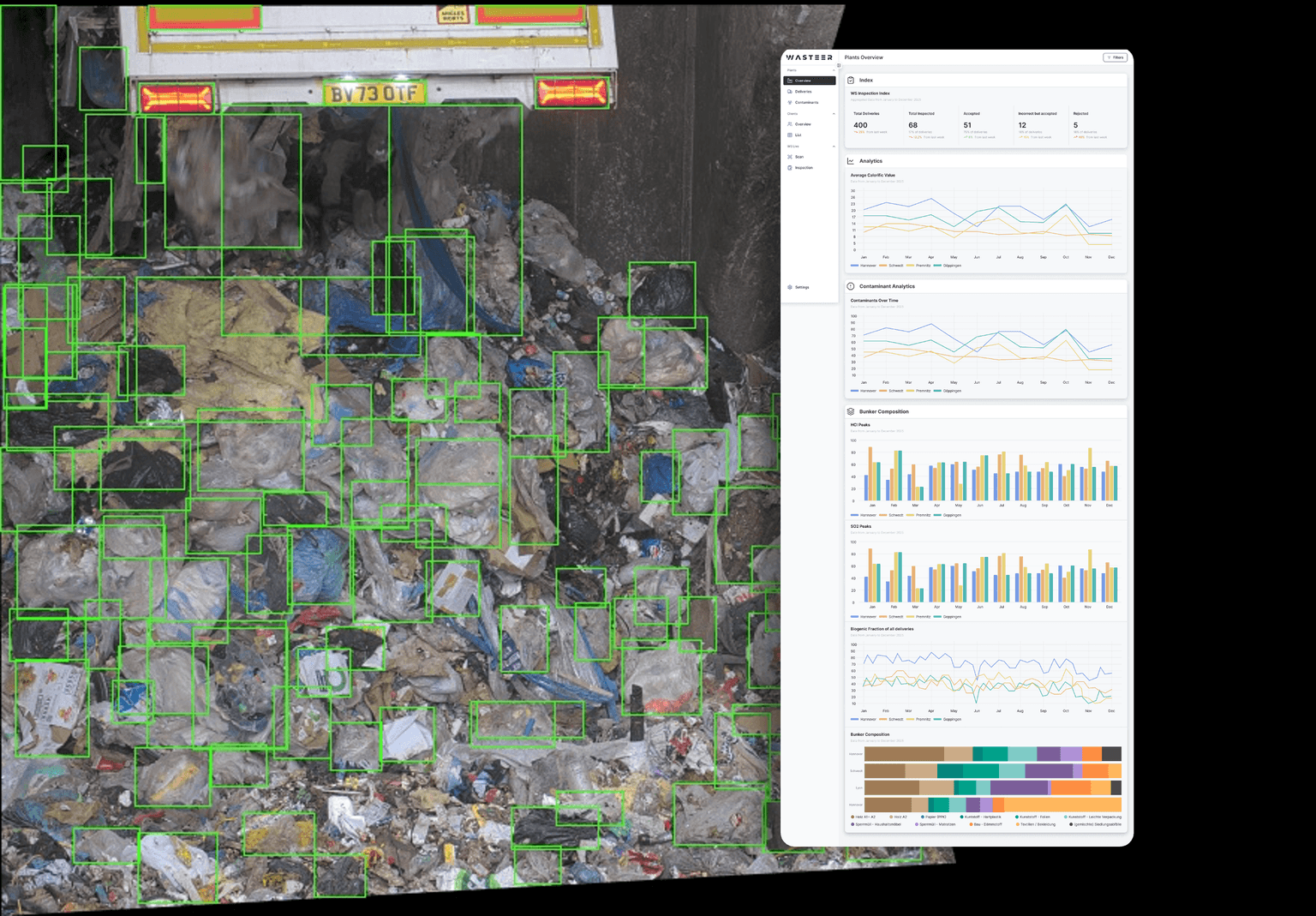
It uses state-of-the-art computer vision and artificial intelligence to visually analyse waste – either directly in the bunker or in the delivery area. In real time, the system identifies typical contaminants such as mattresses, carpets, plastics or electronic devices, and provides immediate alerts to operating personnel.
The key advantage: the system documents all finds and provides a valuable data foundation for analyses, reports and strategic optimisation. This makes visible what was previously hidden – the basis for smart decisions towards recycling and efficient plant control.
From Problem Material to Raw Material: The Potential for Other Industries
What causes problems in incineration can serve as a raw material in other sectors. For example, Evonik's 'Phoenix' project demonstrates how chemical recycling can recover polyols from old mattresses – a material that can be directly reused in mattress production.
Carpets, furniture offcuts and sorted plastic fractions can also be materially recovered. The problem is less the material itself, but rather the lack of separation and transparency in the disposal process.
This is precisely where our technology comes in: it opens access to hidden material streams – and thus enables the targeted recovery of previously unused resources.
Concrete Benefits for Waste Incineration Plant Operators
Deploying digital detection systems yields clear operational benefits:
- Reduced downtime and maintenance costs through early detection of critical materials
- Transparency on input materials, enabling targeted process optimisation, as well as potentially optimised furnace control and improved calorific value forecasting
- Cost savings through targeted identification and, where appropriate, separation of contaminants with market value, and the reduction of unplanned downtime
- Improved sustainability and positioning as part of the circular economy
Smart management of contaminants means: less effort, more efficiency – economically and ecologically.
Looking Ahead: Intelligent Resource Management Instead of Pure Disposal
The future of waste management lies in the intelligent combination of data collection, sorting technologies and strategic recovery.
Contaminants will no longer be seen as an exception, but as part of a digital material flow management system that only becomes possible through systems like our contaminant detection technology.
What is incinerated today can be a valuable raw material tomorrow. AI-powered detection is the first step on this path – towards partnerships between incineration and recycling.
Our Detection System: Your Entry Point into Material Recovery
Our contaminant detection system is more than an analysis tool – it is the entry point into a new form of waste recovery. It identifies problematic materials, creates transparency and enables informed decisions – from process optimisation to sustainable use of raw materials.
Because only those who know what is in the waste can create added value from it.
Conclusion
What is considered a "contaminant" in waste incineration today could be the key to resource conservation tomorrow. With intelligent detection systems, AI and the courage to change, processes can not only be optimised – genuine contributions to the circular economy can be made.