As the UK Emissions Trading Scheme (UK ETS) extends to energy-from-waste, the central question for operators is no longer whether they can run occasional sampling campaigns, but whether they can prove-continuously and defensibly-what was delivered, what was burned, and how much of it was fossil versus biogenic. Traditional waste analysis methods such as periodic manual sorting or infrequent radiocarbon checks produce snapshots that age quickly. What UK ETS really demands is continuous monitoring of waste, an auditable record that covers every hour of the year and ties clearly back to individual deliveries and suppliers.
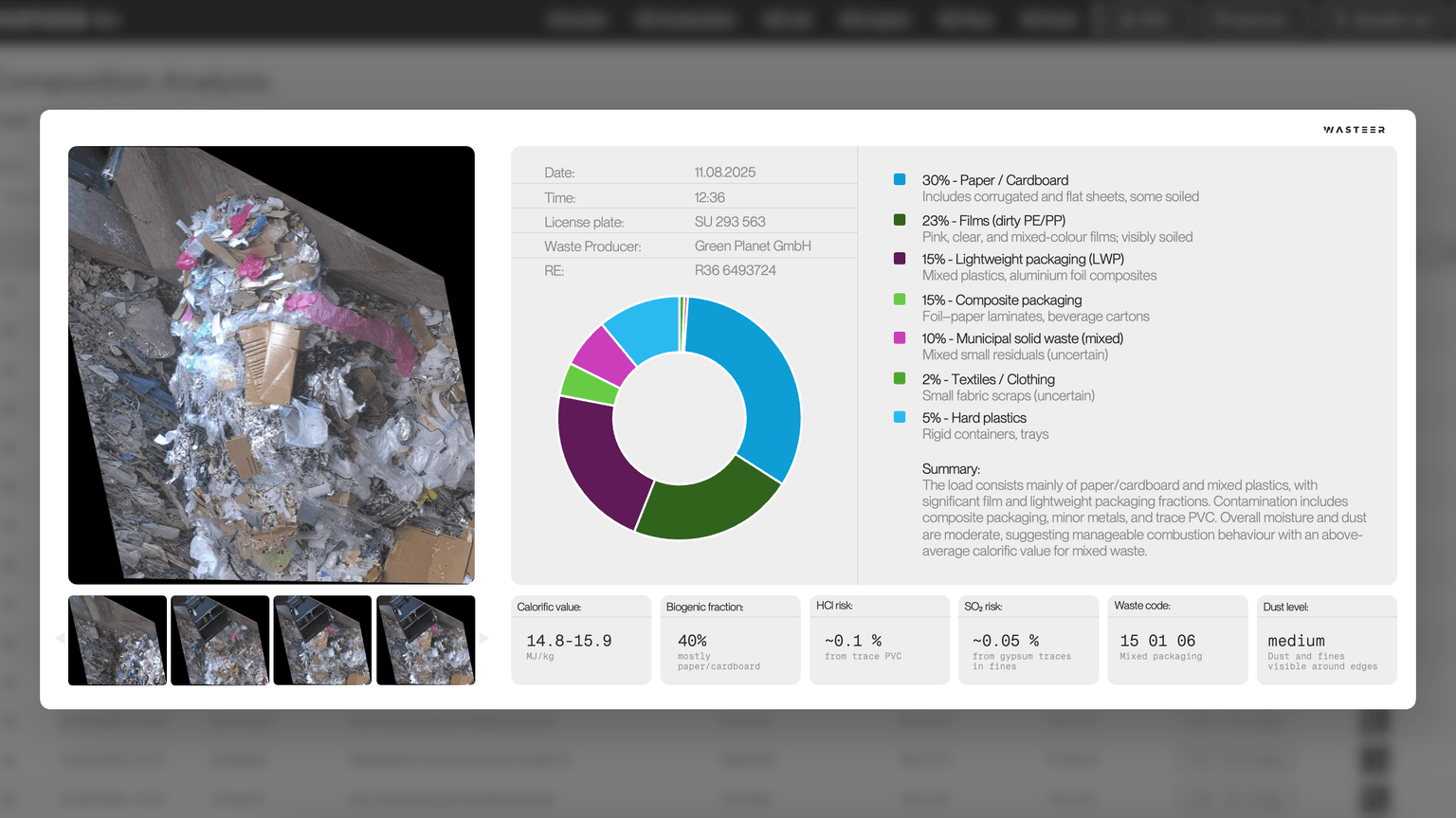
Wasteer was built for exactly this standard. Our platform performs AI analysis of waste composition on the intake side and documents every delivery 24/7, 365 days a year. High-resolution visual evidence and model inference are captured for each tipping event, creating a persistent, image-anchored record of what entered the bunker. For every delivery we compute composition indicators (including plastics and other fossil-derived fractions), provide LHV estimates, and maintain traceable attribution to the responsible supplier or contract. Instead of episodic, manual data points, operators gain a living dataset that mirrors real operations-hour to hour, season to season.
This intake intelligence complements stack-side measurements and radiocarbon testing by explaining variance between campaigns and day-to-day reality. With continuous intake data, plants can backtrack biogenic fractions-and therefore fossil shares-directly to the deliveries and suppliers that drove them. That attribution matters for UK ETS because only fossil CO₂ is liable; the ability to show, with evidence, how fossil content changes over time and who supplied it enables fair cost allocation, smarter contracting, and faster resolution of mis-declaration disputes. In other words, Wasteer supplies the intake-side proof that makes MRV narratives coherent: what came in, when, from whom, and what that implies for biogenic vs fossil CO₂.
The operational effects are just as important. Continuous composition visibility stabilizes process control by flagging shifts that would otherwise surprise the boiler-helping operators keep LHV within band and tempering emission-risk peaks associated with problematic streams. Because our analysis is attached to specific deliveries, plants can intervene upstream in real time, adjusting bunker mixing or supplier scheduling before small deviations become costly compliance or performance issues. Over weeks and months, this translates into steadier operations and fewer ad-hoc investigations.
For verifiers and regulators, the value is the audit trail. Wasteer’s records are evidence, not estimates: time-stamped images, delivery IDs, and composition outputs that can be followed from intake to reporting. That traceability supports monitoring plans under UK ETS and reduces ambiguity during audits by connecting stack results to a transparent history of incoming material. It also gives operators a clear, consistent narrative for how they monitor waste continuously, which waste analysis methods inform their reporting, and how their AI analysis of waste composition is used to backtrack biogenic fractions and manage fossil exposure responsibly.
Ultimately, compliance under UK ETS is a measurement and governance challenge as much as a technical one. Wasteer turns the intake gate into a source of truth, providing the continuous monitoring and supplier attribution that EfW operators need to satisfy MRV expectations and run their businesses with fewer surprises. If your goal is to meet UK ETS requirements with confidence-and to do so with a data foundation that improves operations along the way-Wasteer delivers the per-delivery, year-round visibility that makes it possible.