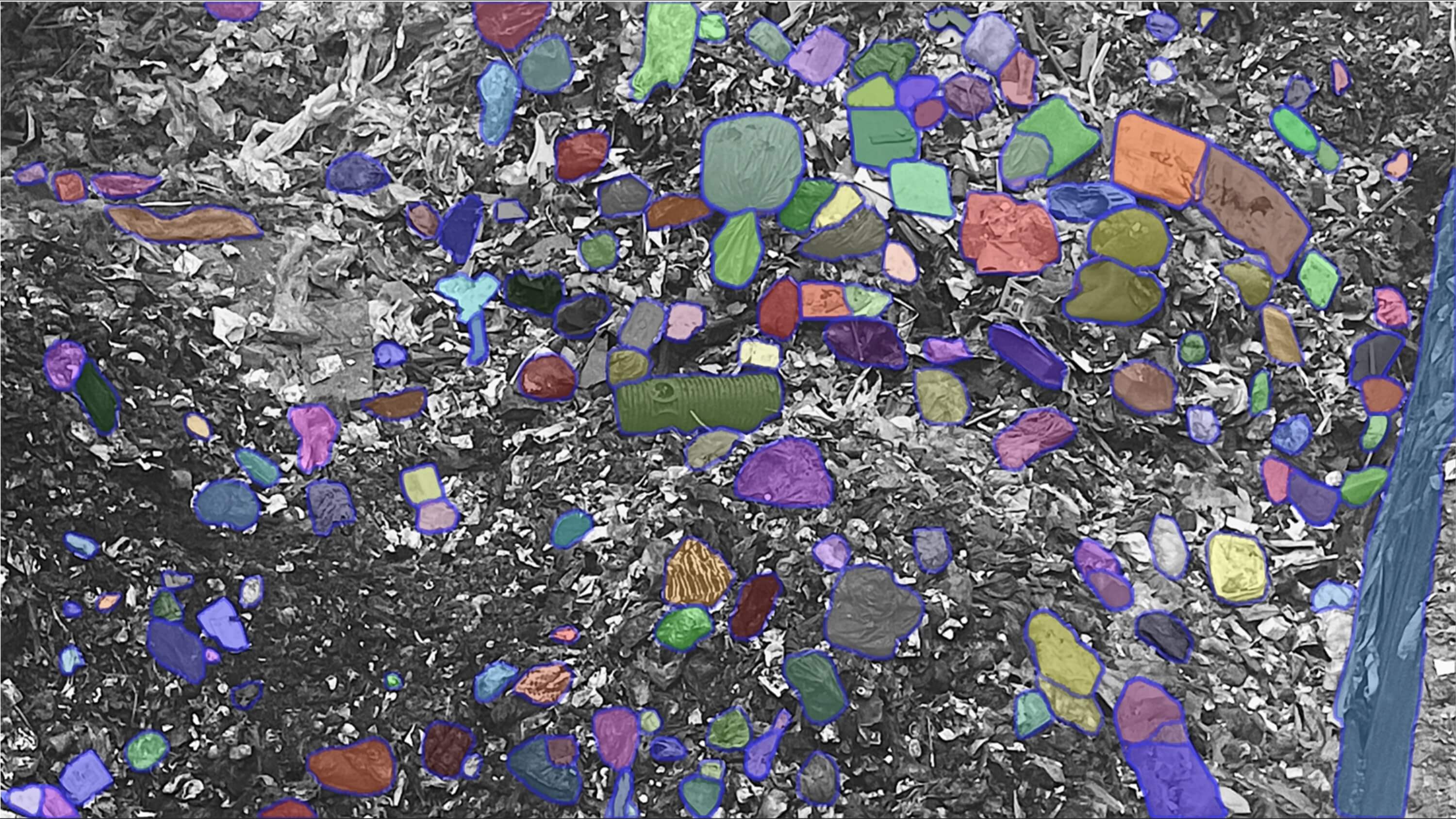
- Successful pilot project secures Wasteer another plant from British enfinium Group
- A2A extends Waster's mandate in Acerra, Italy by several years and expands technology application
- Use of artificial intelligence to modernize waste management remains in demand
**Berlin/Deeside, May 13, 2025 **– The German AI company Wasteer will also be deployed at the Parc Adfer waste recycling plant in Wales. The plant belongs to the enfinium Group, the leading provider of energy-from-waste solutions in the UK, with six plants, two under construction. A trial project at enfinium’s Ferrybridge-2 plant, which began at the end of 2024, has already delivered promising results, resulting in the mandate being extended. The Italian energy supply company A2A is also convinced of the benefits of the technology installed at the Acerra waste-to-energy plant: Wasteer’s contract with the plant has been extended by several years and the technology’s area of application expanded.
For several months now, 15 plants of the German EEW – Energy from Waste as well as other German clients, enfinium’s Ferrybridge-2, A2A’s Acerra waste incineration plant and the eco-incineration plant in Krakow of Krakowski Holding Komunalny (KHK) have been working with Wasteer to implement solutions based on artificial intelligence (AI). These make it possible, for example, to analyze waste compositions, issue notifications in the event of hazards and digitally document operations. All with the intention of achieving efficiency gains.
“Digital, AI and Technology enhancements are at the heart of our asset management strategy and we are always looking for innovative ways to make our plants modern and future-proof. At Ferrybridge-2, we were already able to achieve promising results in the validation phase with Wasteer. It was therefore the only logical step for us to extend this technology to other plants as quickly as possible,” says Chris Bebbington, Head of Group Asset Management at enfinium. “With Wasteer’s AI technology, we can, for example, detect incoming contaminants. In conjunction with the license plate recognition module that we are now integrating, we can then also identify where these substances are coming from – and tackle the problem at source. Aside from the commercial benefits and avoided downtime, there are also clear health and safety advantages – any oversized item detected and removed from the tipping hall or bunker, prevents the need to remove objects from the ash discharger and removes any risk associated with that activity.”
For Wasteer CEO Benedict von Spankeren, the mandate shows why a pilot project is often the ideal start for an extended collaboration: “With our technology, we quickly deliver measurable effects. The initial effort by the pilot plant was very low: we need an internet network on-site and electricity, we take care of everything else. In the following process it’s all about learning from each other quickly and efficiently. Of course, we are particularly pleased when, as in this case, we can create trust over time that the use of our technology in other plants and over an extended period of time is worthwhile.”
Individual solutions for individual challenges
Wasteer offers both a modular software package for thermal waste recycling plants as well as support with the installation of the necessary hardware on site, such as the modern camera systems. With its AI-supported scan, the Berlin-based company automates impurity detection and composition analysis in real time. This allows statements to be made about the composition of the waste - what materials and what objects does it consist of? What quantities of what are present? Among other things, this information can be used to calculate calorific values and biogenic fractions or to evaluate risks from sulphur oxides and hydrogen chloride. In conjunction with Wasteer’s other modules, waste recyclers also have access to digital control reports, their own database and an ongoing overview of customers and waste. The technology can significantly reduce plant downtimes, save on operating resources and increase throughput.
According to von Spankeren, the challenges for waste recycling plants are often similar, but never the same – especially with regard to contaminant detection. His company’s solutions must therefore be tailor-made: “We don’t have a standardized list with objects that we can detect. Rather, our technology enables us to recognize almost all materials and shapes and thus build tailor-made algorithms for the individual requirements of each plant. Every plant is different, every waste is different and poses different challenges.”
AI solutions are meeting with great interest: Wasteer is already in use in more than 20 plants. Further projects, including in non-European countries, are already in the pipeline. Headquartered in Berlin, the company emerged from NEEW Ventures GmbH, EEW’s corporate venture builder, in 2023. Benedict von Spankeren’s team now comprises 13 employees.